One week of Barcelona, one week to fit in as much Antoni Gaudí as possible. By no means did we see all the Gaudí the city has to offer, but we did see some of the major Gaudí attractions and a few bonuses.


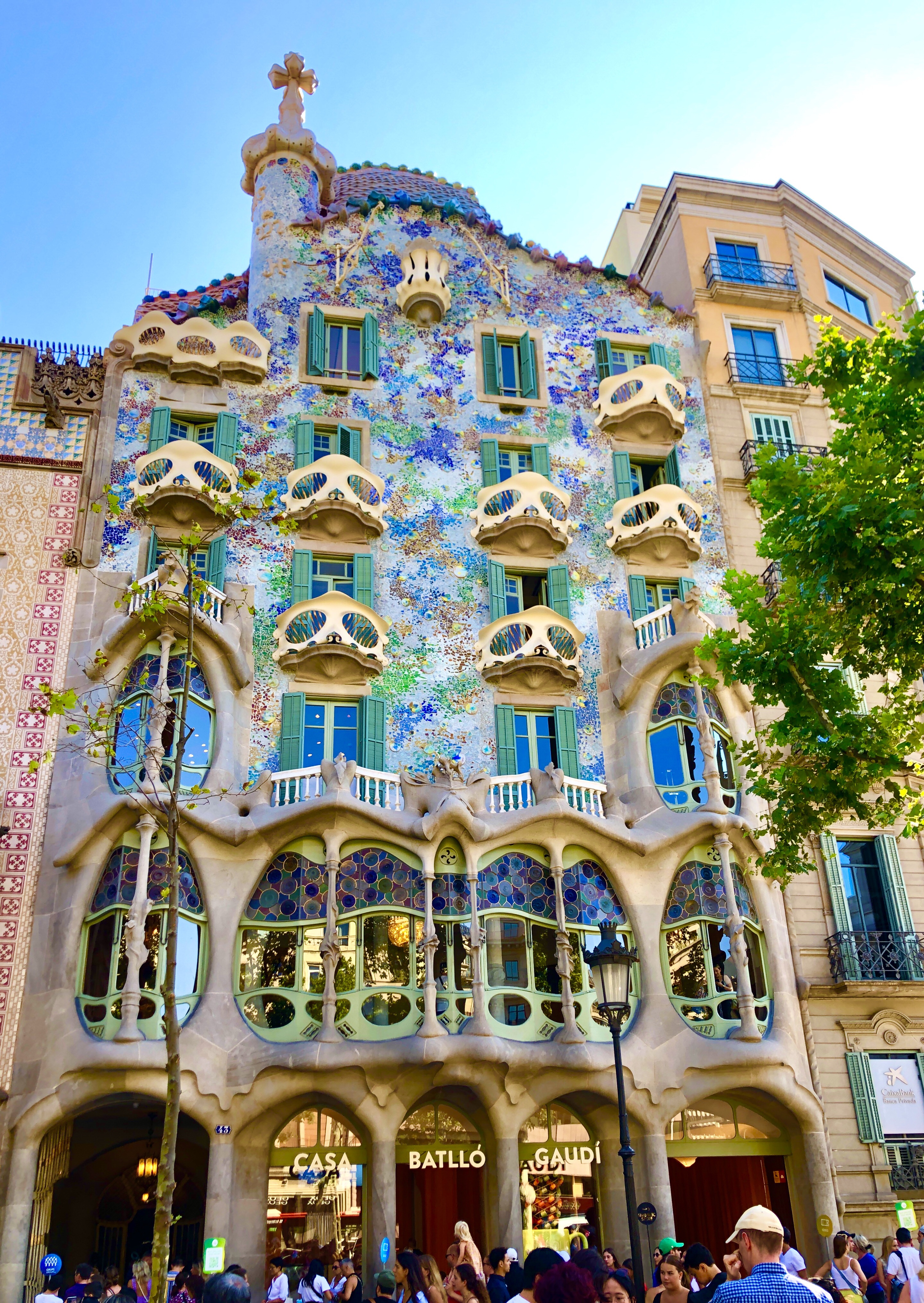
And so I guess we begin at the beginning – what’s the big deal with Gaudí? A Catalan architect who is considered one of the top representatives of modernism. His designs utilized patterns from nature, such as waves, scales, bones, and flowers, and his ideas were seen as ground-breaking. During his time, many did not know truly what to make of Antoni Gaudí. According to the Casa Batlló website, when he graduated from the School of Architecture in 1878 Elies Rogent, the director of the school, declared: “I do not know if we have awarded this degree to a madman or to a genius; only time will tell.” Gaudí’s designs are colorful, whimsical, and imaginative – something I knew my young artists would be interested to explore more.
Three of these, The Sagrada Familia, Casa Milà, and Casa Batlló, we saw in one day – each took between 1 – 2 hours, so we reserved tickets with time in between to have lunch or a snack and take a break. It was a busy day, but the air conditioned tours were a dream come true during the summer heat wave.
Let’s start with what is often considered Gaudí’s crowning glory, the Church of the Sagrada Familia.
1. The Church of the Sagrada Familia
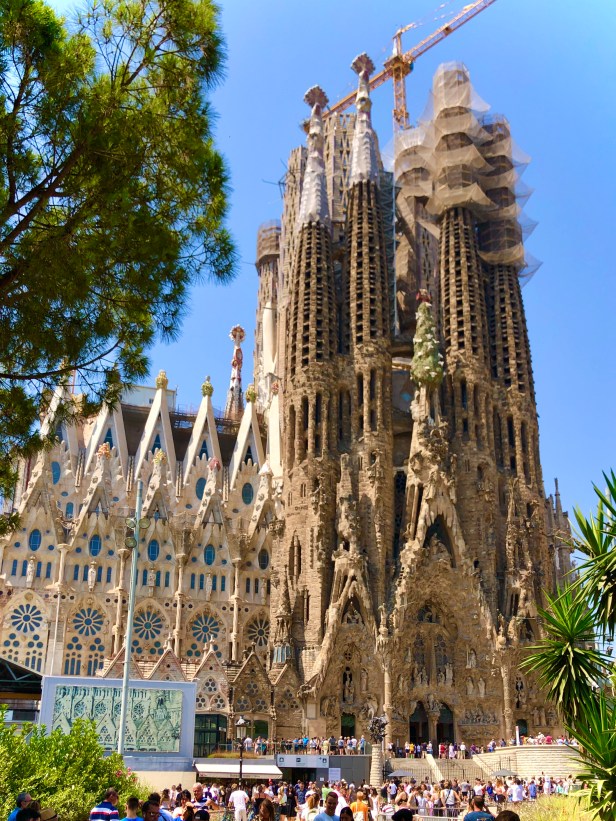
Unfinished and in progress for over 130 years, the church is tentatively slated for completion in 2026. Will it or won’t it? This fascinating Time article can tell you all you need to know.
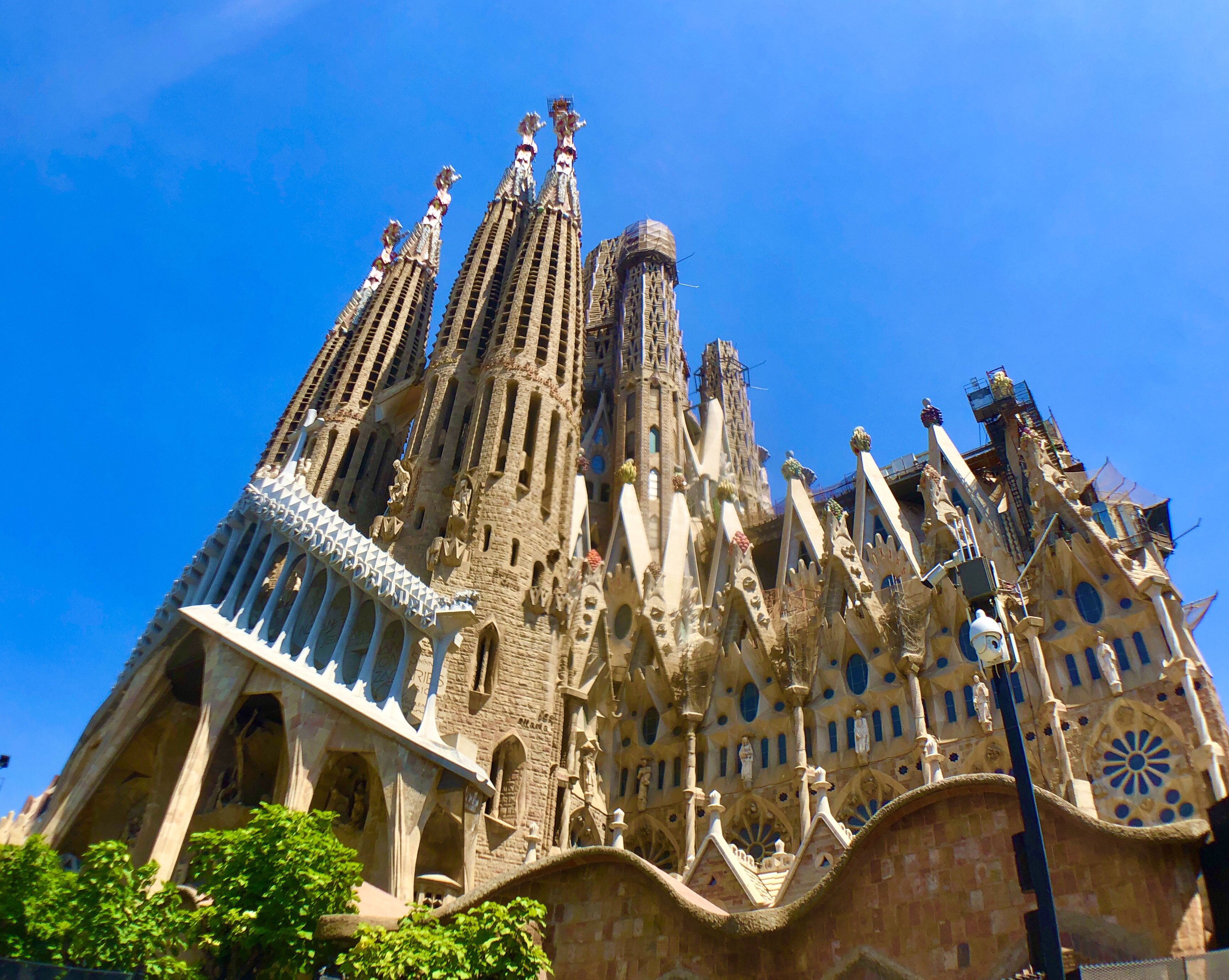
We bought tickets for both the cathedral and to climb the towers at the Nativity facade. When purchasing tickets you are given the option to climb either the Nativity or the Passion facades, so here’s the comparison: the Nativity facade is decorated to be fanciful and depicting life, while the Passion facade is austere, carved from bare stones in angular and rigid shapes, to depict misery and death. We went for the happy one, and bought tickets directly from the website here.

Nativity facade 
View walking down from the Nativity facade 
Nativity facade 
Walking down the tower stairs 
Passion facade 
Passion facade
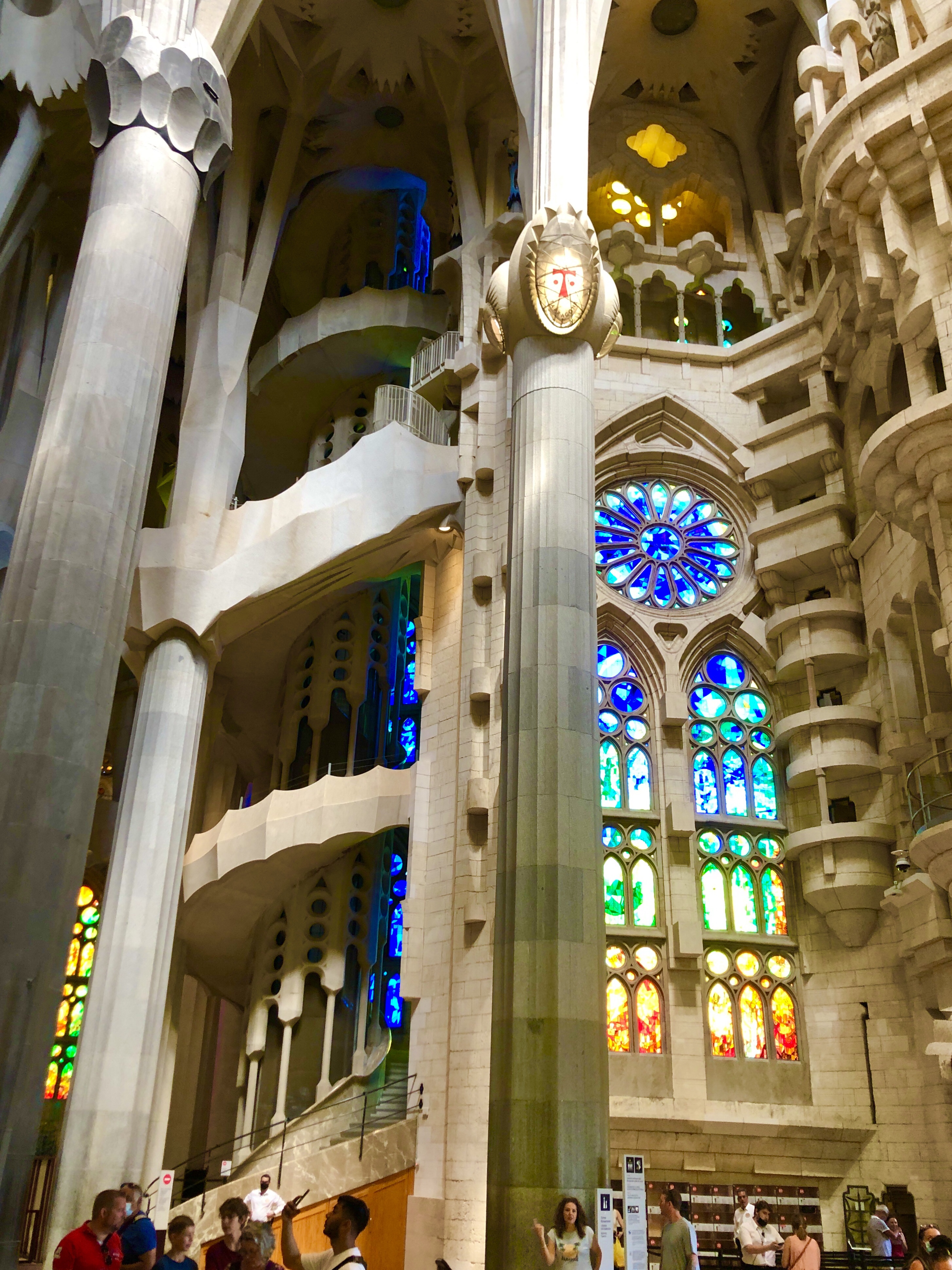
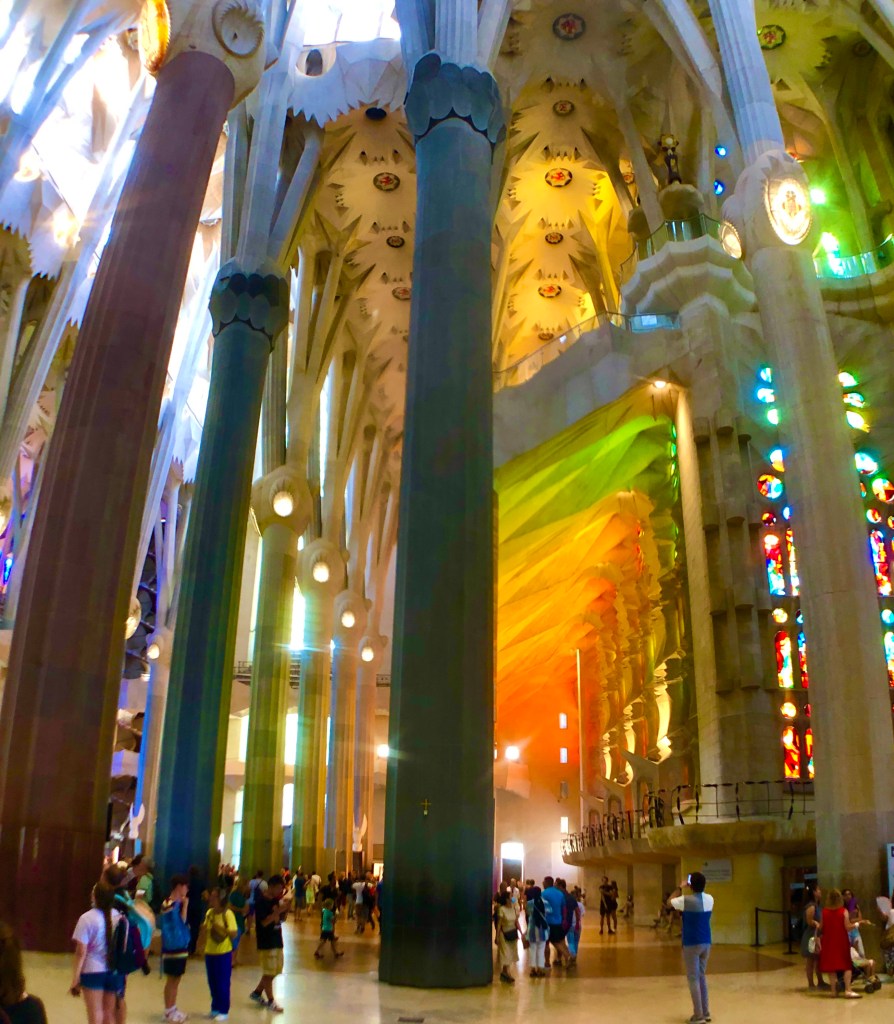
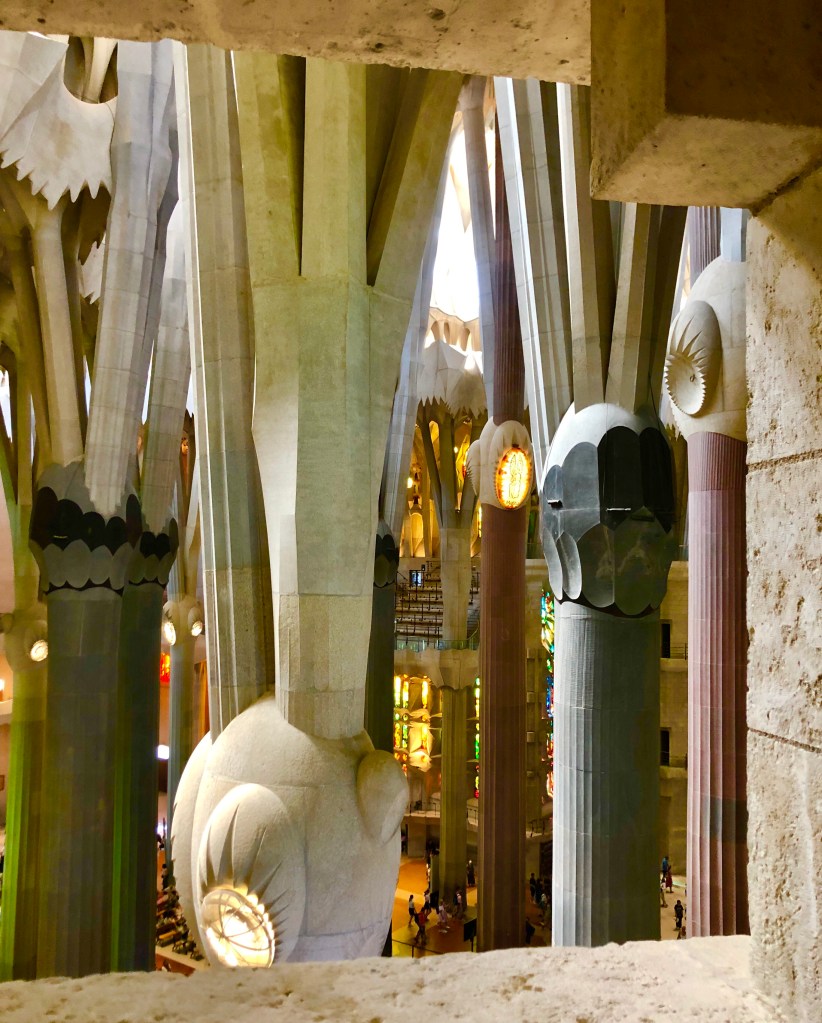
Inside the church the first impressions are of the light from the stained glass windows, and the immense columns – angled pillars in a treelike columns, creating the effect of a forest with light streaming through it.




2. Casa Milà, aka La Pedrera, “The Stone Quarry”

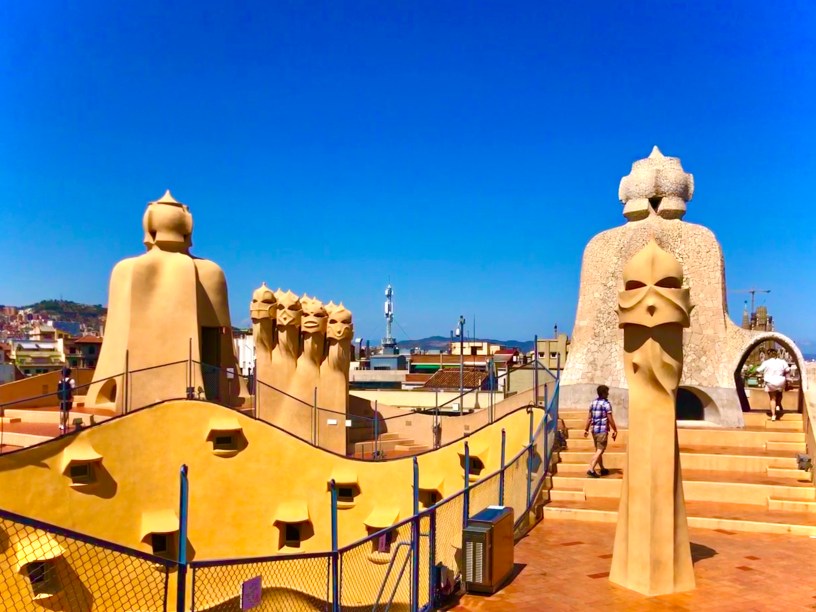
The last assignment he took on before the Sagrada Familia, Casa Milà is regarded as Gaudí’s most iconic civic architecture. The functionality of the structure – think advanced methods to provide ventilation, lighting, and insulation built entirely within the form of the building itself, along with the creativity, have made La Pedrera famous. The project was over budget, over time, and many people hated how it looked, but the ingenuity and artistry is now widely appreciated.
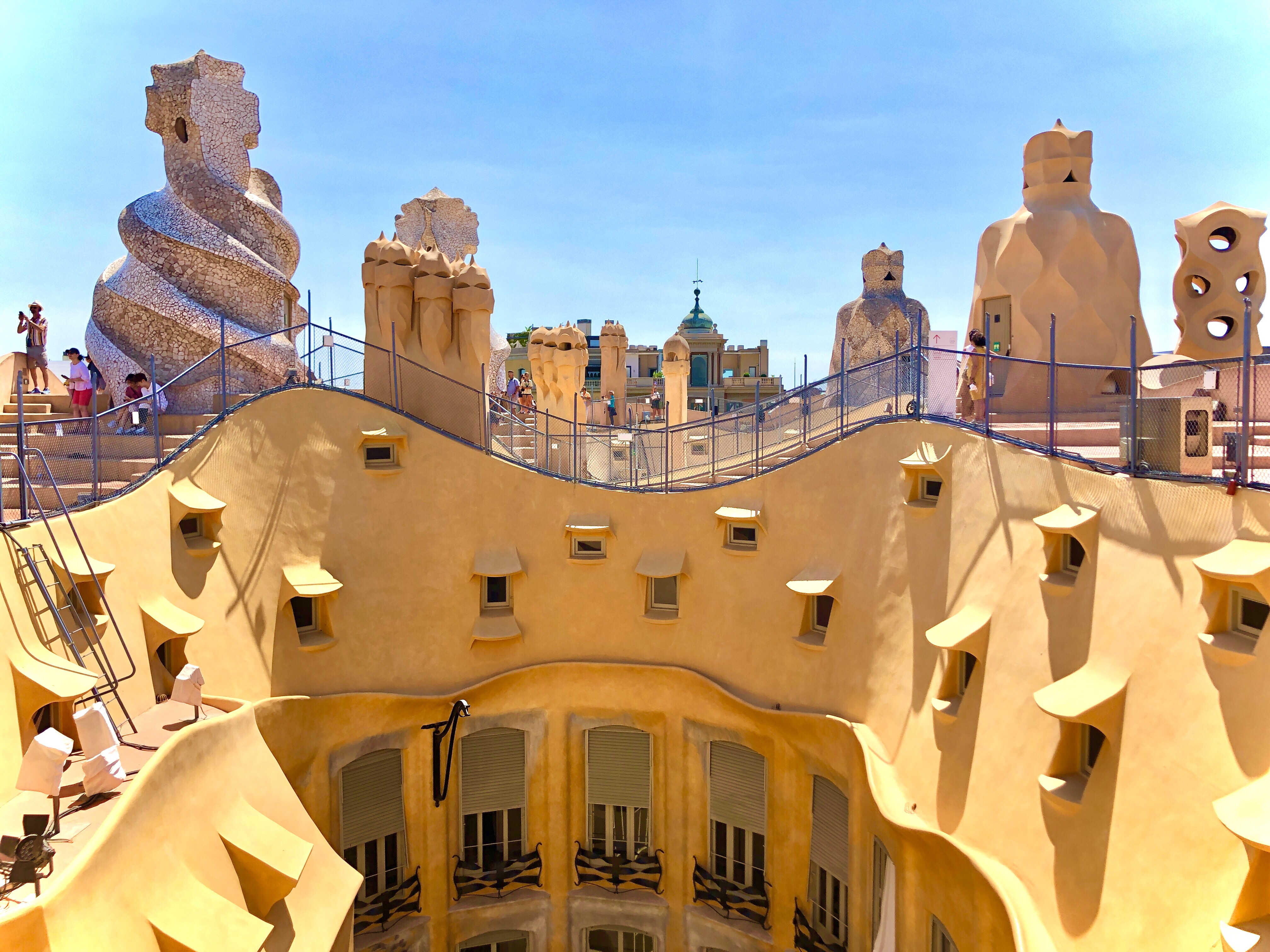
On the rooftop, arguably the most extraordinary area of the building, you find numerous stairwells and ventilation towers, all designed into curving shapes, and the chimneys resembling guards with helmets; the protectors of Casa Milà (I loved them, took lots of pictures of them – they remind me of the movie The Iron Giant).
Learn more and buy tickets here.
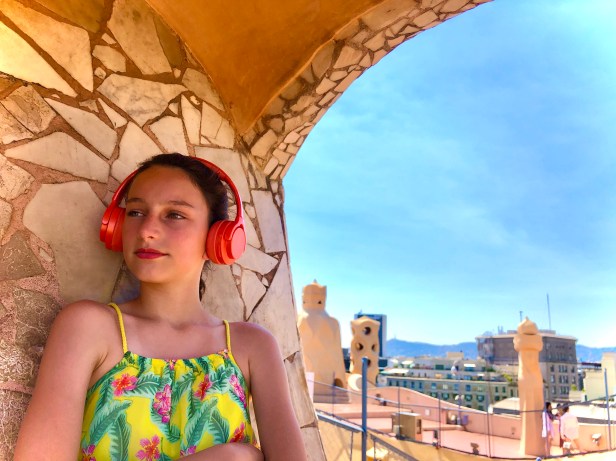

Penny with the protectors 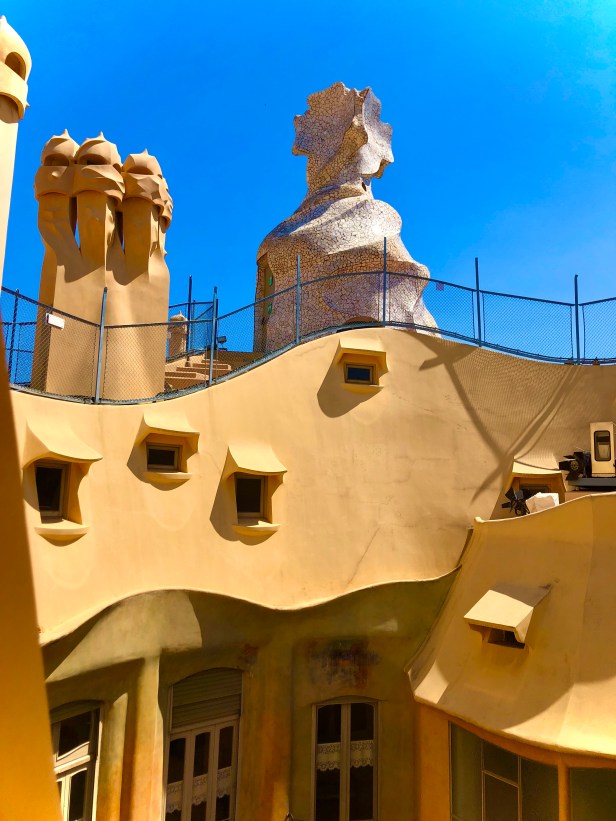

Margot and the guard 
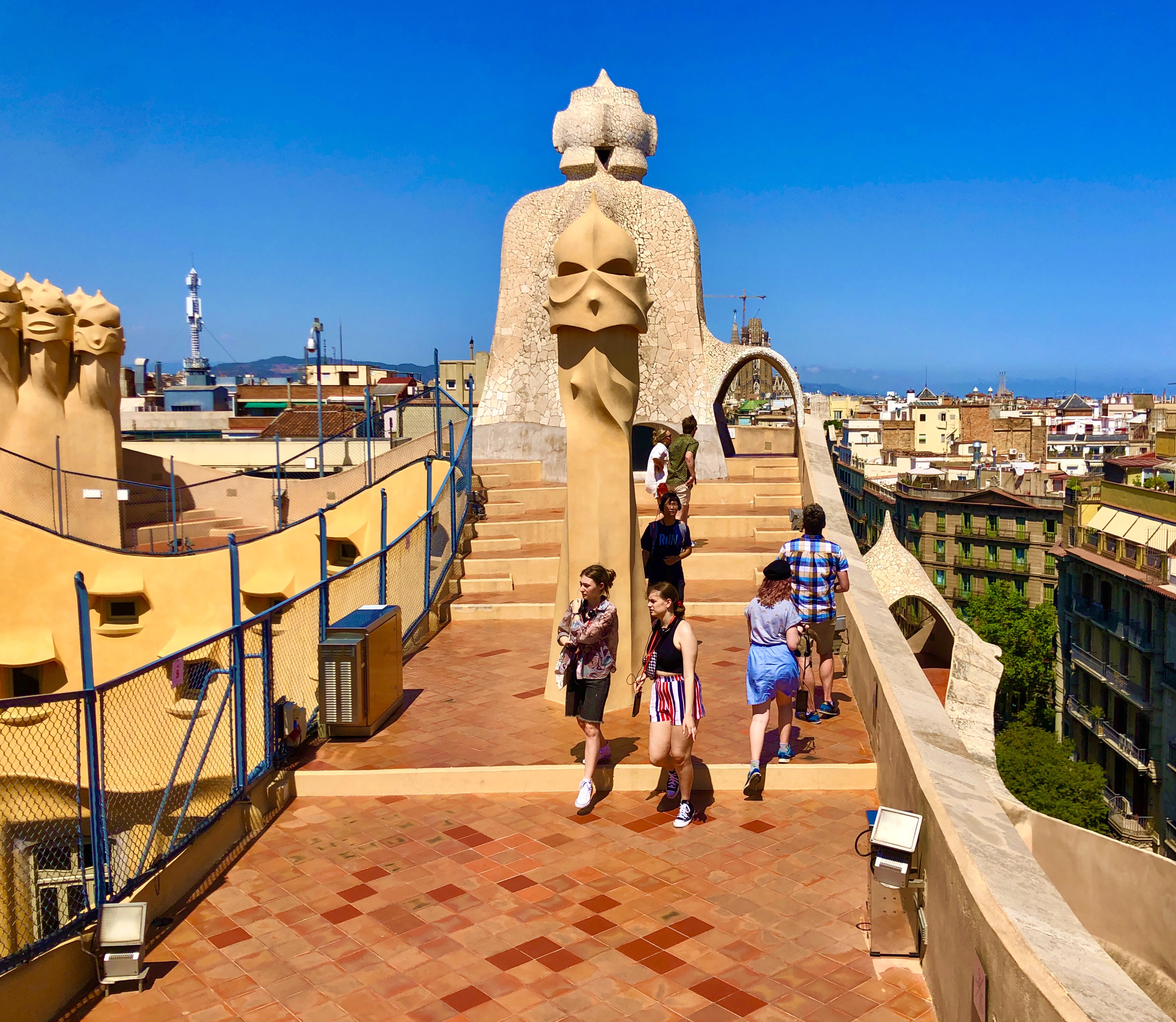
Inside, some of the apartment has been restored, but a good deal was changed by residents. Compared to Casa Batlló, Casa Milà’s interior is understated. Primarily beige and green, its easy to see why the building was referred to as the stone quarry, both from the outside and in.
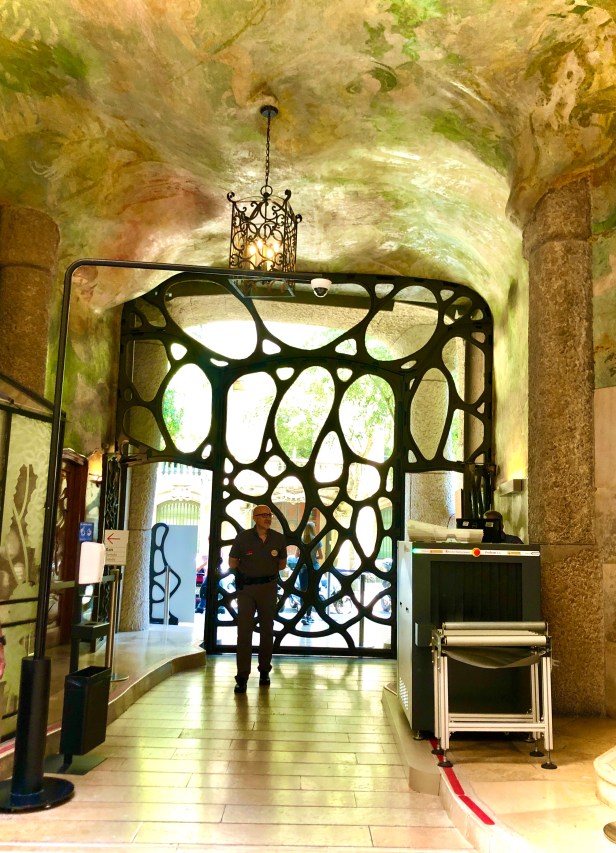
Entryway 
The stairway 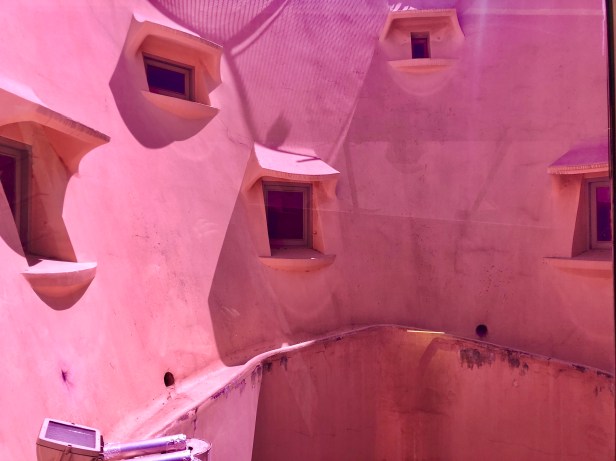
From the window and strong light, the courtyard walls looked pink 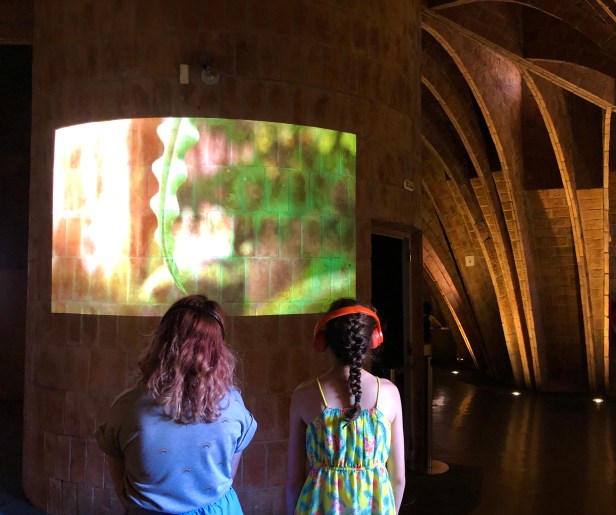
Learning about the natural elements of the architecture in the attic 
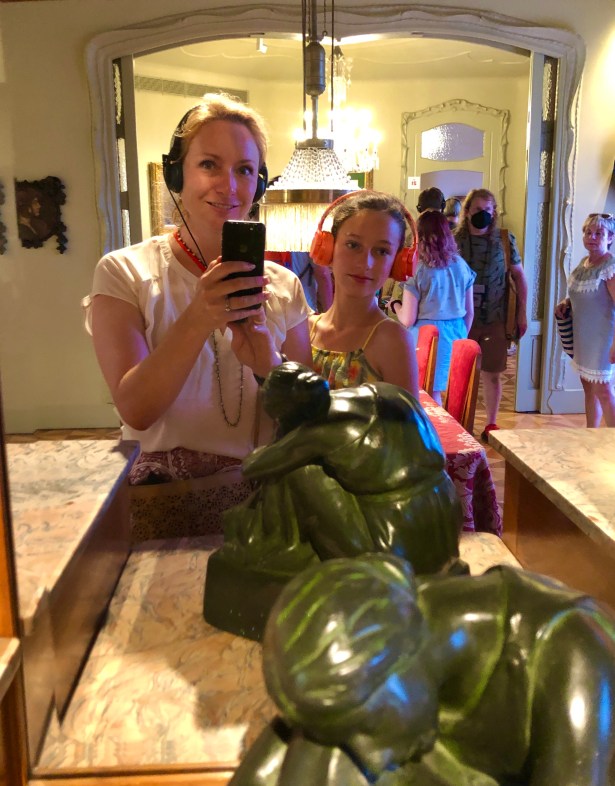
Touring the apartments

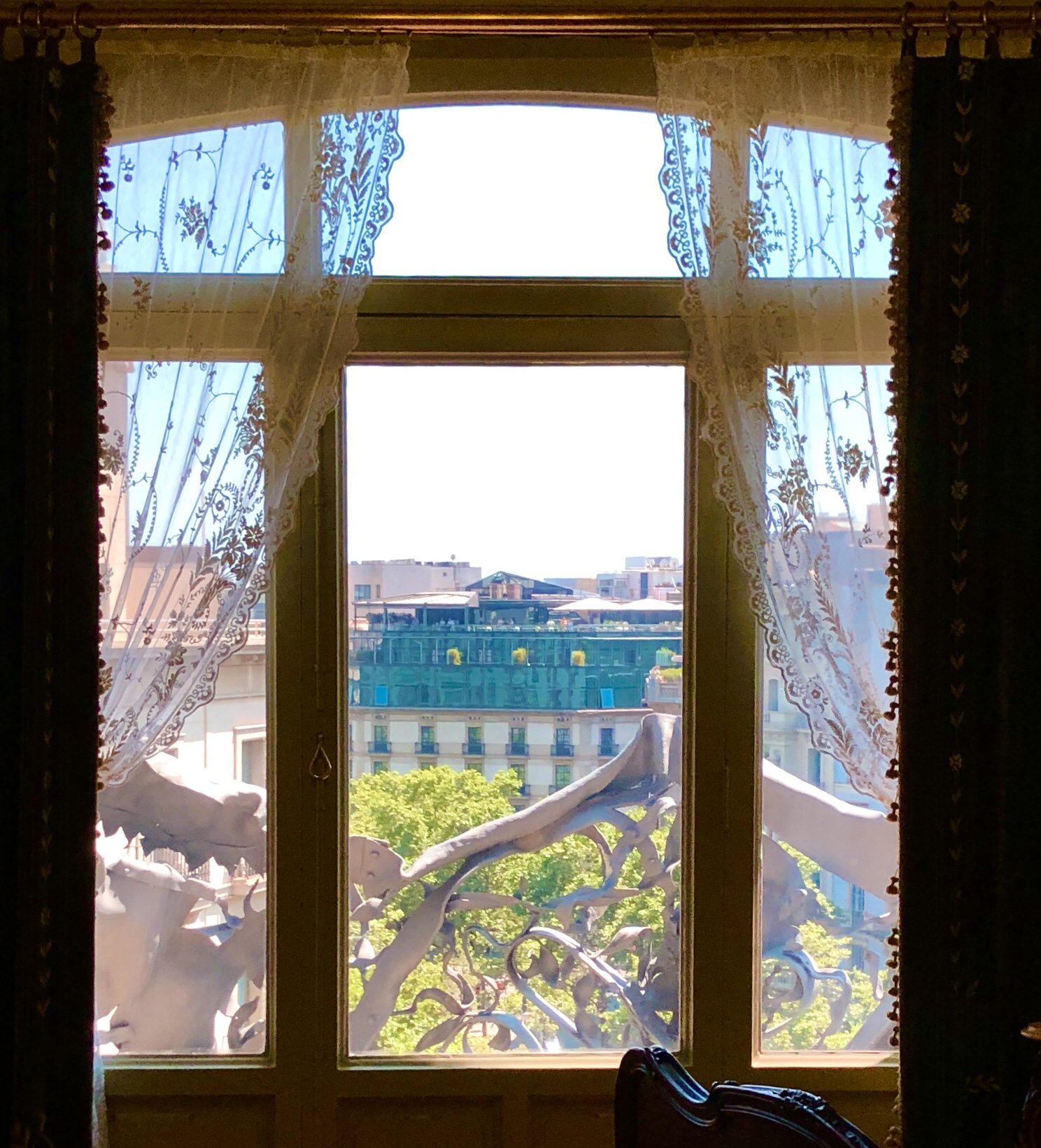

3. Casa Batlló

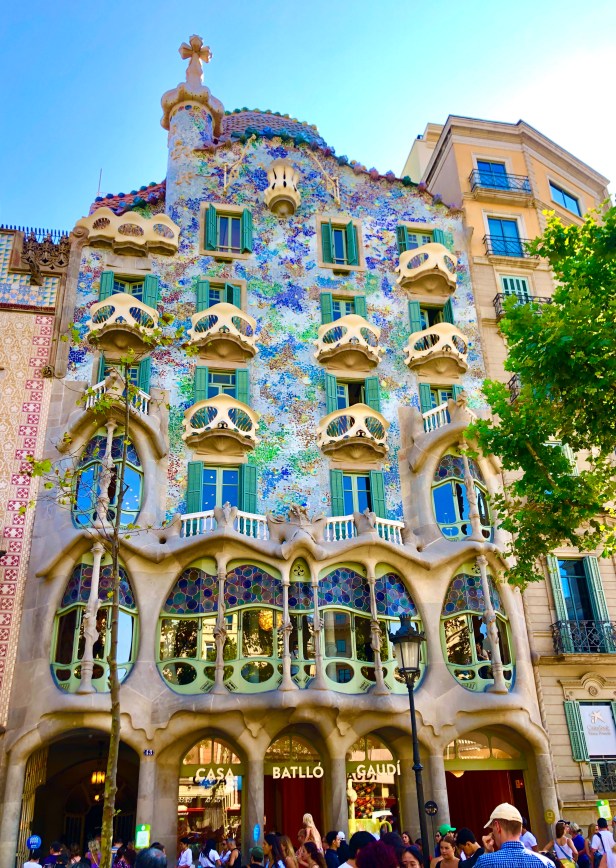
Casa Batlló is perhaps the more famous of Gaudí’s apartment building projects, in this case a redesign of an existing building. Vastly photographable, the exterior is awash with colors and design, and the street where it sits, Paseo de Gracia had, at the time of the renovation, become the canvas where modernist architects were all vying for notoriety and competing for awards convened by the Barcelona City Council. Therefore, this period was known as The Bone of Contention, and you can find other famous buildings from notable architects of the time along the street – in fact, Casa Amatller, by Josep Puig i Cadafalch, is right next door.
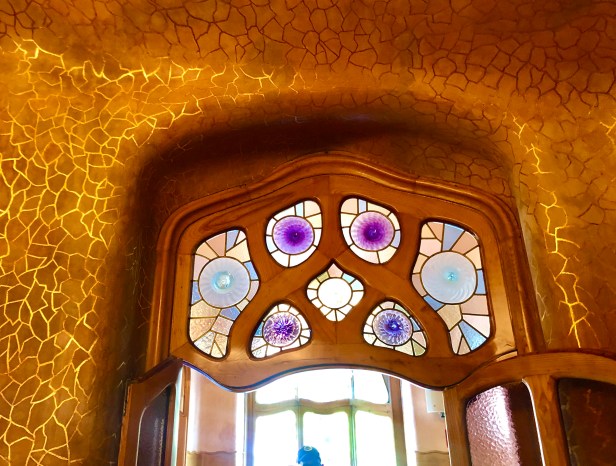
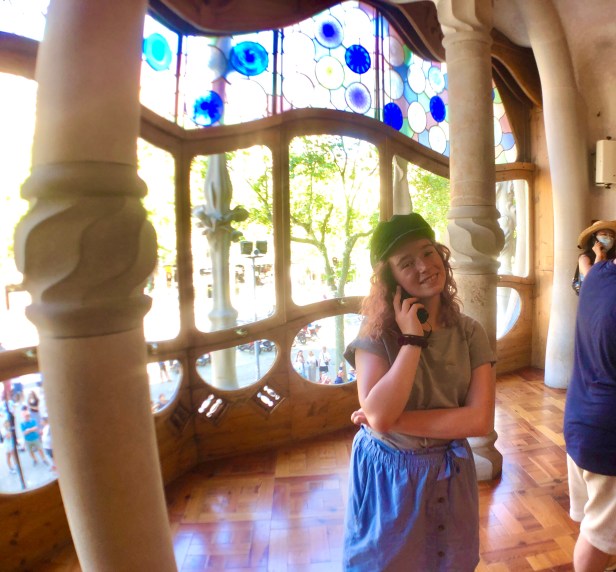
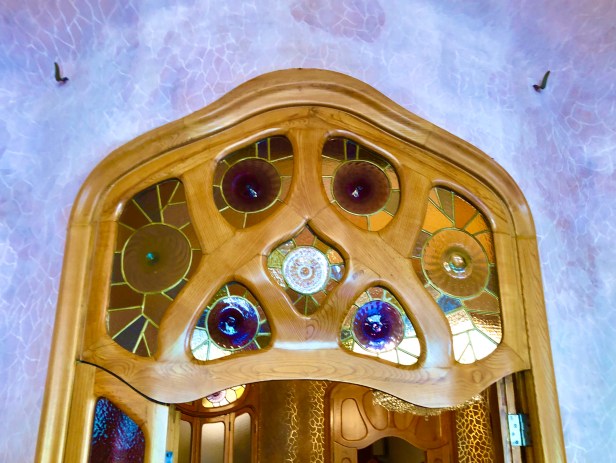
Inside Casa Batlló you sometimes feel like you’re inside a submarine, other times an aquarium, and other times still the belly of a whale. The walls of the building shift shapes, colors, and light to transform from sea floor on the ground level to nearing the surface of the ocean as you reach the top. The colors enchant, and it’s easy to see how the building itself mesmerizes its inhabitants. Entering a room felt like climbing into Gaudí’s own private ocean dreamscape.
In the photos you can see wallpaper like golden scales, windows like air bubbles, ceilings like spines, and pillars like bones.




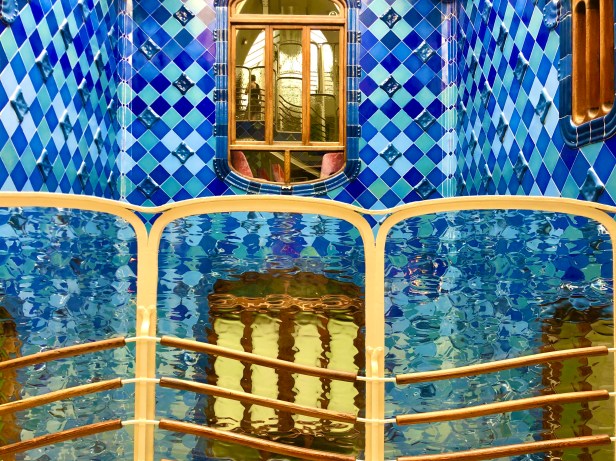


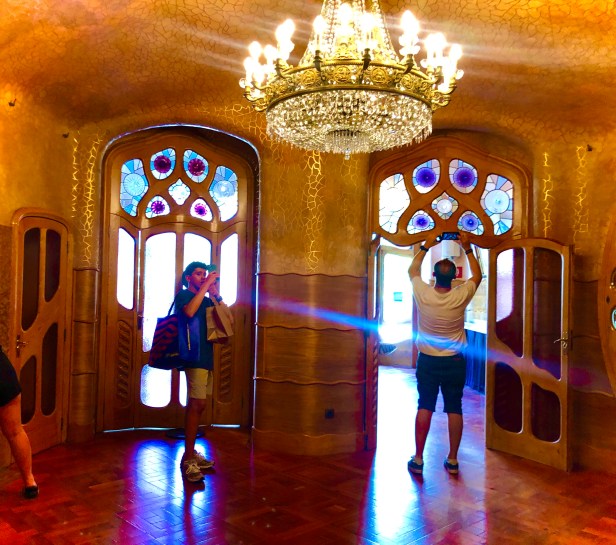


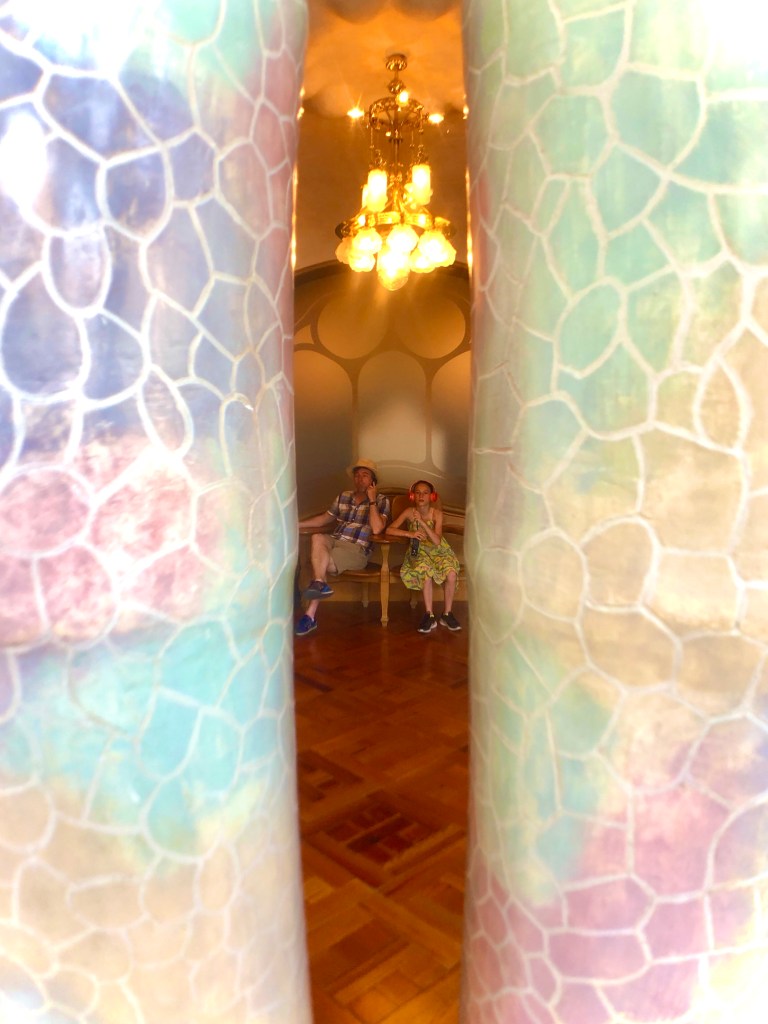

The main courtyard holds colorful mosaics, again extending the sea creature theme, and like Casa Milà, the rooftop of Casa Batlló is not only functional, but a living art piece in itself. The rooftop outdoor spaces evoke images of sea serpents and dragons, scales winding along the roof and walls. Interpretations often focus on the idea of Saint George, patron saint of Catalonia. Since Gaudí was profoundly religious, this makes sense. On the rooftop is a bar and what a great view as we relaxed with cool drinks in the hot sun.

Downstairs courtyard patio 
Downstairs courtyard patio 
Downstairs courtyard patio 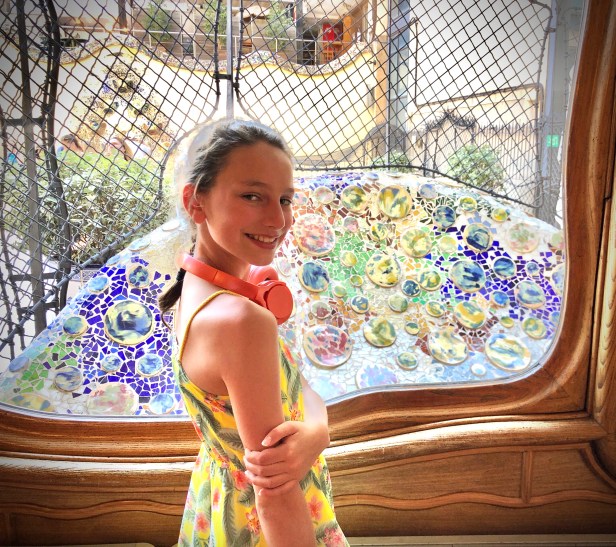
Downstairs courtyard patio 
Downstairs courtyard patio
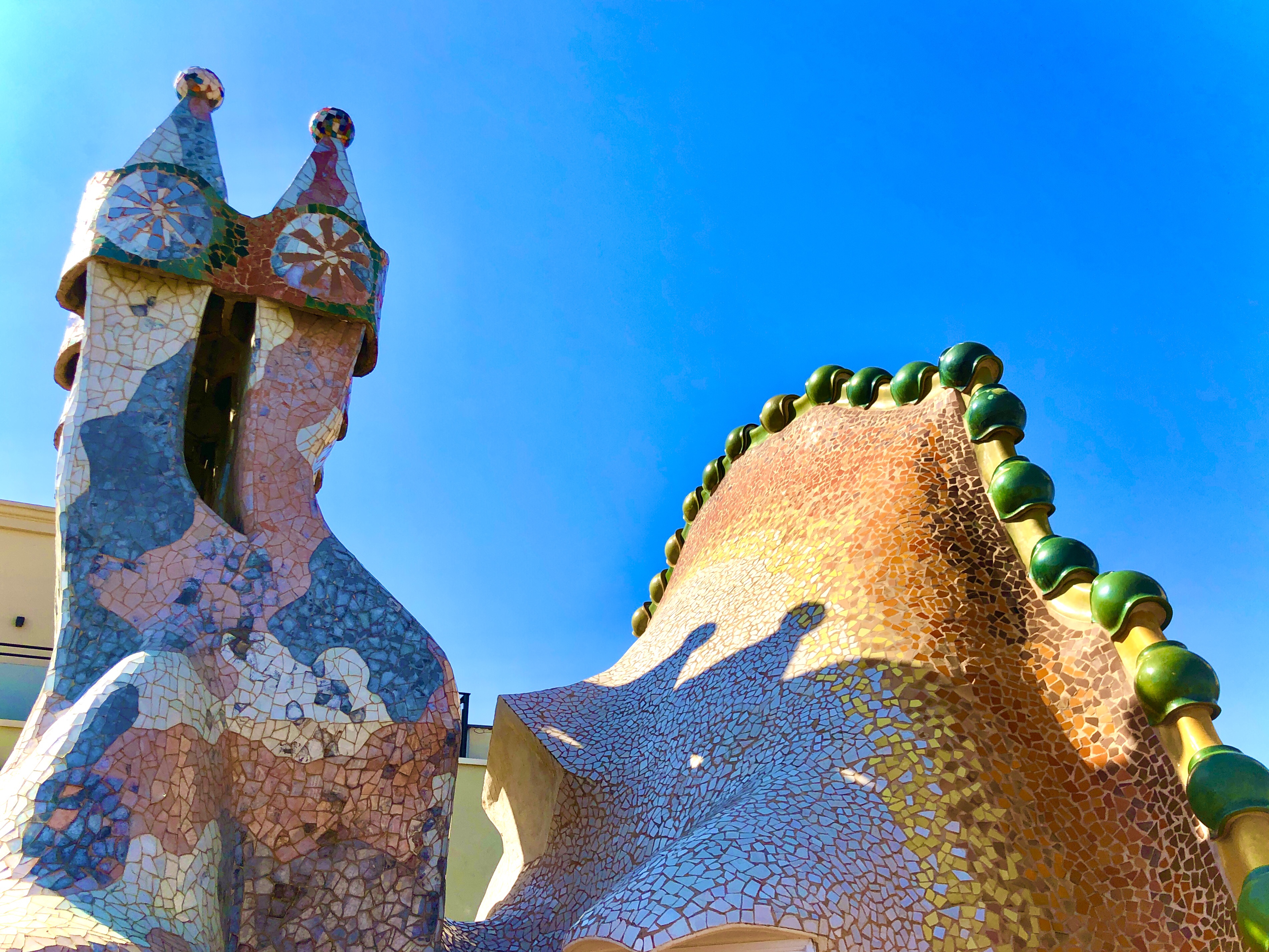


Scaly roof 
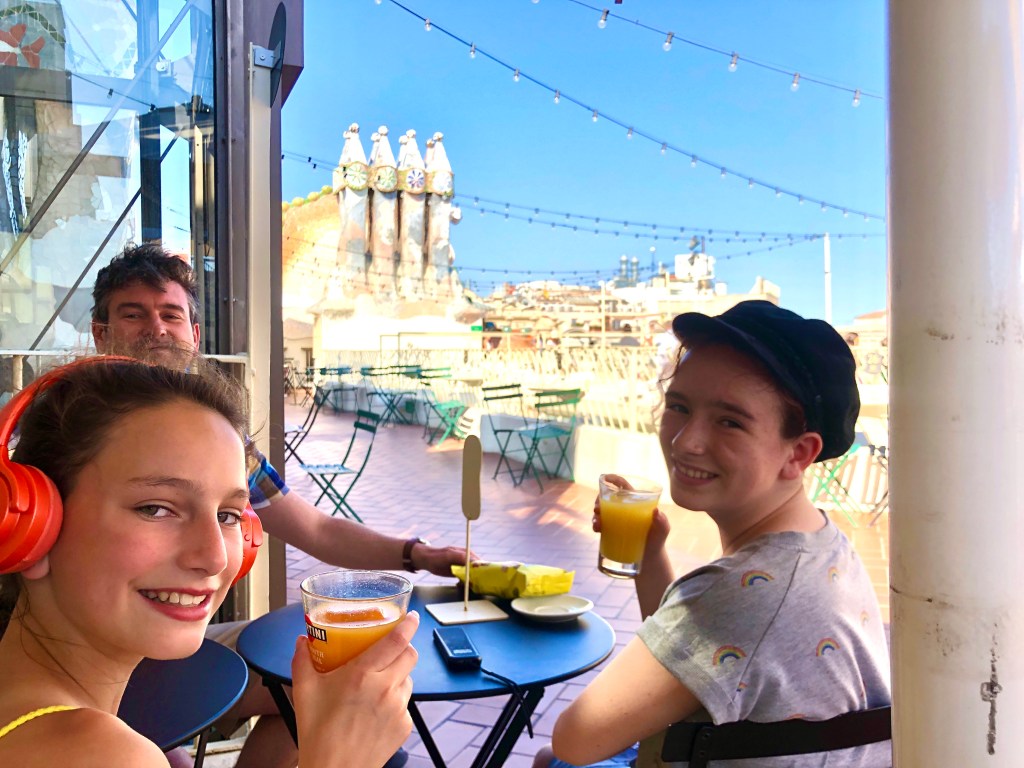
Cooling off on the roof

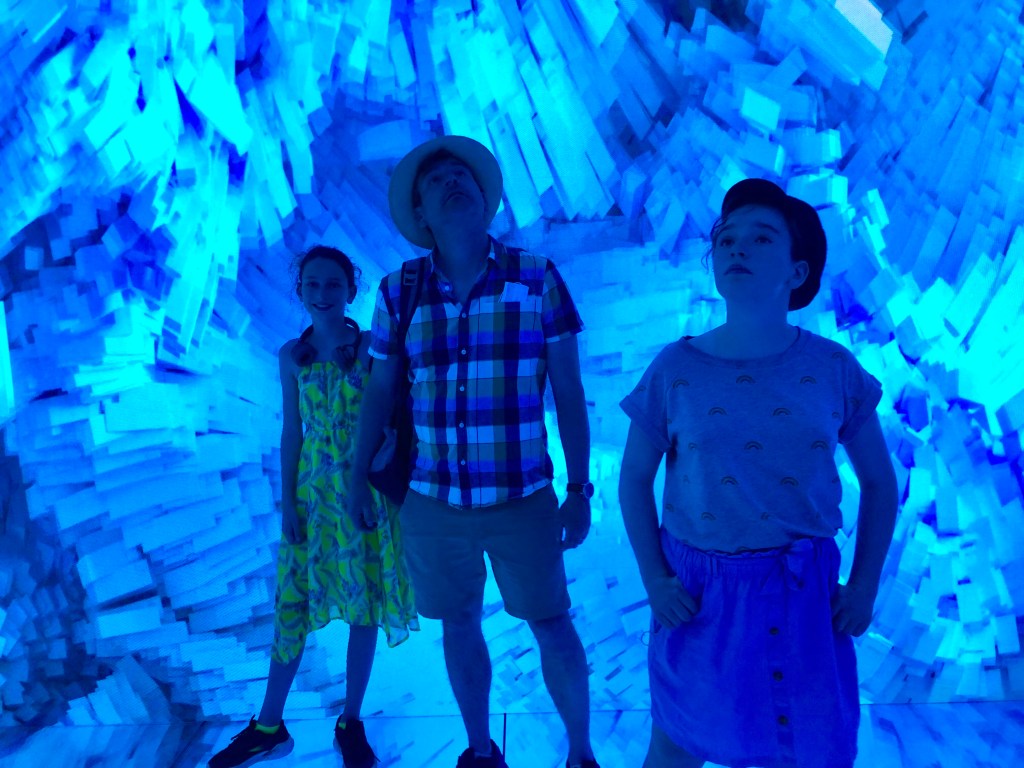
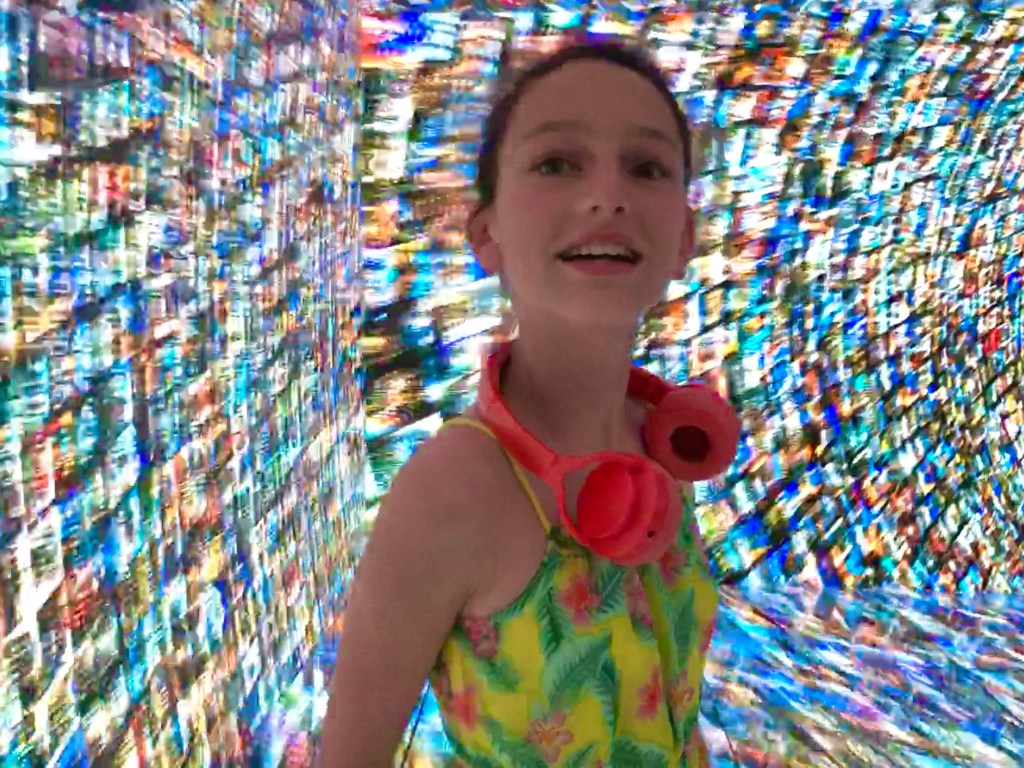
There were two art installations inside Casa Batlló when we were there, both immersive visual arts experiences, and my kids LOVED them. A fantastic way to bring a contemporary feel to this stunning modernist building.


 thecloudsarelowerhere