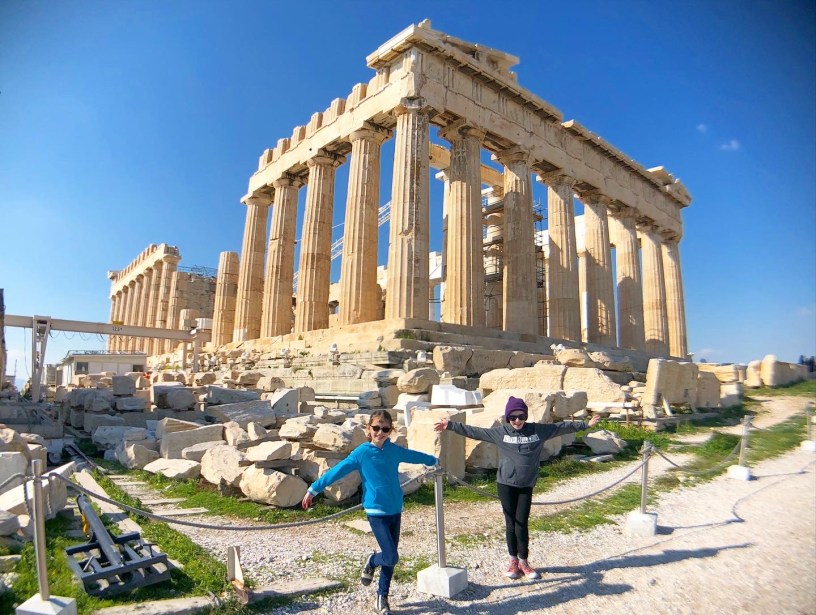
Ahh, the winter break to escape February; my favorite of all vacations. This year, we ducked out to Athens, exploring the history of Greece, and soaking in the sunshine.
The vacation coincides with my Percy Jackson-obsessed oldest’s birthday; and what better way to celebrate her than to see the temples of the gods and goddesses of her beloved novels?

With some much to see in Greece, this post covers the different temples we visited in Athens. With the weather a bit cool (it was February, after all) and the crowds low, this was the perfect opportunity to really take our time with the ancient ruins. I’m not one to name every wall, courtyard, and latrine, so we kept it more high level.
Thus also began our very key activity of counting Greek cats, which was of the utmost importance throughout the trip and kept our littlest vastly entertained.
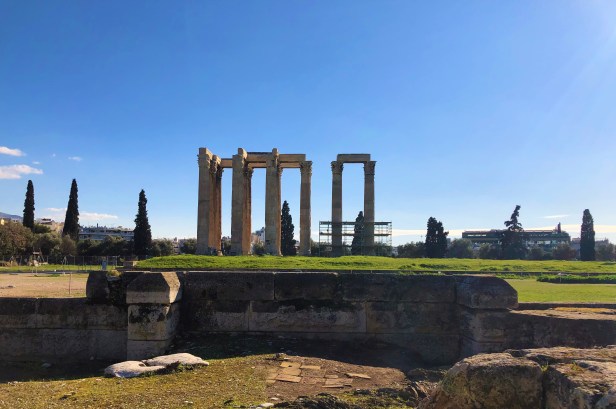
This was our first stop, as we passed it by while walking towards the apartment we had rented for the week. We couldn’t resist sauntering through our first ancient ruins of the vacation, even with our backpacks. The site shows evidence of habitation from the Neolithic period, and the earliest archaeological evidence of a temple in the area dates to the 6th century B.C. 


 The Acropolis
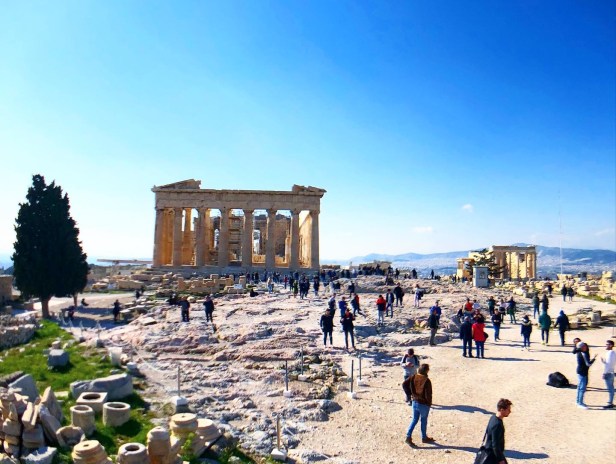
The Acropolis – the face of Athens, and the most striking and complete ancient Greek monumental complex still existing in our times. It is situated on a hill, with Athens surrounding below.
Multiple hours spent climbing, viewing, exploring. The best visit I’ve had here, because there really were almost no crowds.




 Ancient Agora of Athens
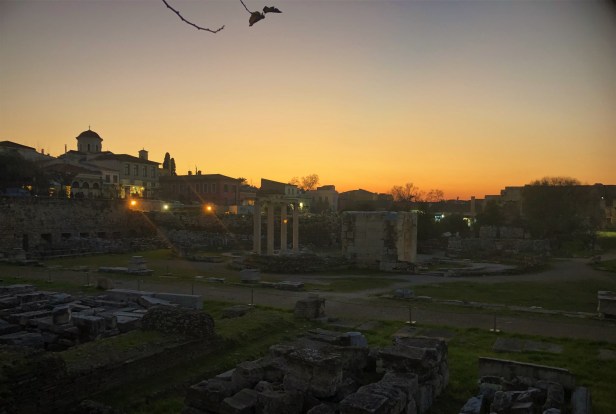
The word “agora” in Greek means “marketplace”. Athens’ agora remained in use either as an assembly, commercial, or residential area for about 5,000 years. Inside the Agora you can find the Temple of Hephaestus (say it with me – Hef-fest-us) and the rebuilt Stoa of Attalos. 


Philopappos Hill, Hill of the Nymphs, and Hill of the Pnyx
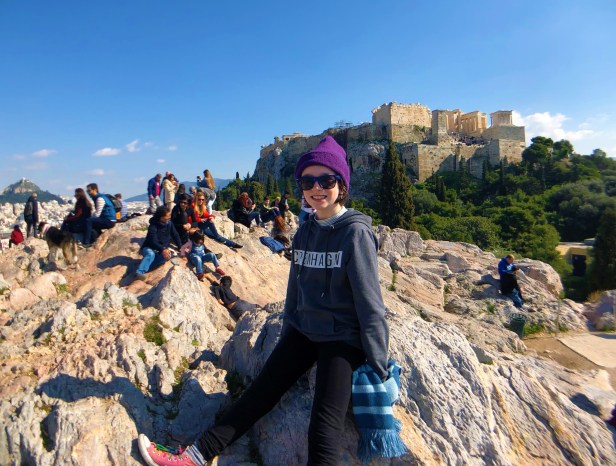
West of the Acropolis are three hills, altogether forming one large park area, and affording great views of the Acropolis, as well as a number of other ancient sites. These three hills are where I took my morning runs while in Athens, and also where we enjoyed numerous sunrises and sunsets, as well as a lot of climbing and exploring. The area around the Philopappus Hill contains many historic sights, including the prison of Socrates.
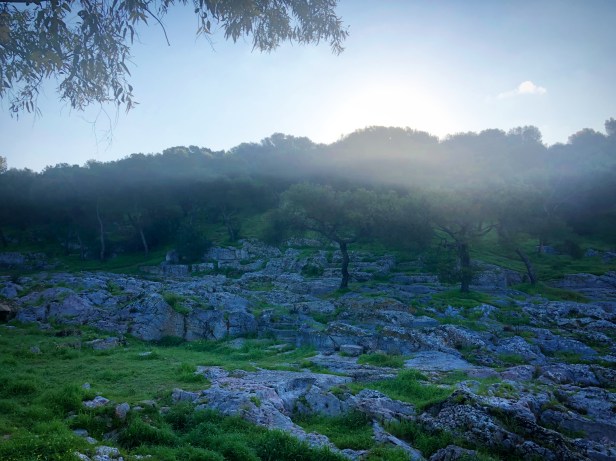 Philopappos Hill is named after a monument erected at the top of the hill in honor of the Roman emperor Philopappos. Formerly named The Hill of the Muses, the Greeks believed that this hill was inhabited by the nine muses and that Musaeus, a poet and disciple of Orpheus, was buried here. The hike up to the monument is much more interesting than the monument itself, as is the name Hill of the Muses vs. Philopappos.


The Hill of the Pnyx, just north of Philopappos, is the birthplace of democracy, where, from 508 B.C., citizens assembled to listen to orators and take political decisions. At the end of the fourth century the assembly moved to the Theater of Dionysus.
Lastly, the Hill of the Nymphs was, in ancient times, the site of a shrine dedicated to the nymphs.

Our second day in Athens was windy and cold; it was still winter, after all. Making it the perfect day for a visit to the Acropolis Museum. The museum is splendidly light-filled, even on a cloudy day, an elegant showcase of the fine pieces in the exhibits. 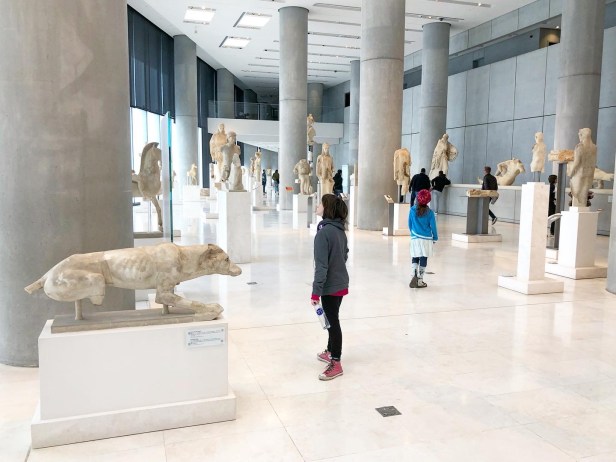


If I can give one summary statement about exploring all these ruins in Athens its this: no one, including the kids, was bored. We spent most of our time outdoors, and everyone was totally exhausted at the end of the day. So, perfect.

 thecloudsarelowerhere