
This past November I joined my colleagues from China in running a customer event in Sichuan Province, in southwest China. After two days of presentations and meetings, we enjoyed a great evening of hot pot and dance performances, and the next day took a hike up Mt. Qingcheng. After that I had one day in Chengdu as I awaited my flight.


Mount Qingcheng


First, a history lesson. Mt. Qingcheng is a mountain in Dujiangyan in Sichuan. It is considered one of the main birthplaces of Taoism. During the Han Dynasty, the emperor went there to study Taoism, and found his Taoist way in the fifth cave, and afterwards palaces, pavilions, and towers were built around this cave. Zhang Daoling, a master of Taoism, here created Wu Dou Mi Dao, the earliest sect of Taoism; he is now known as the father of Taoism.
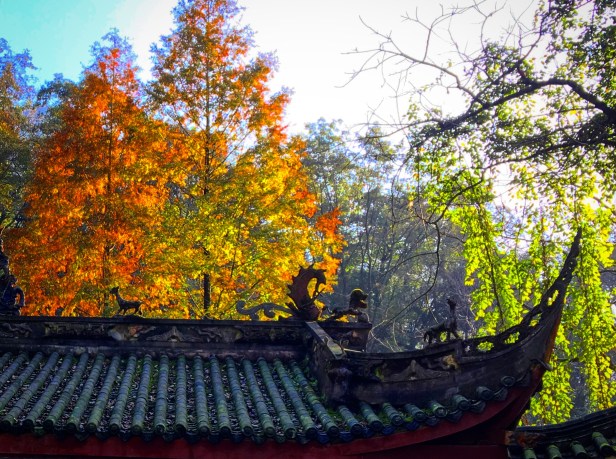
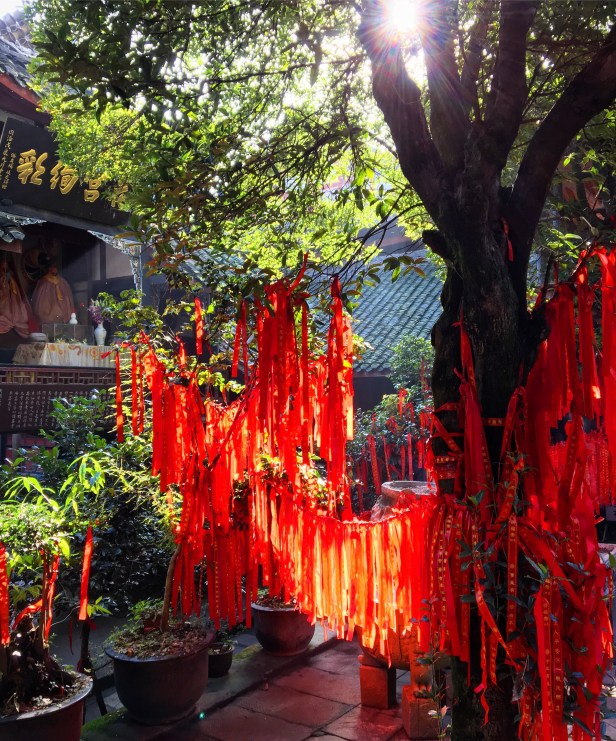
We first hiked through the mountain amidst numerous temples made from the forest around us. A major tenet of Taoism is the emphasis on harmony between humanity and nature. This is represented throughout the mountain. The yin and yang symbol, representing balance with duality, is also seen throughout the site.




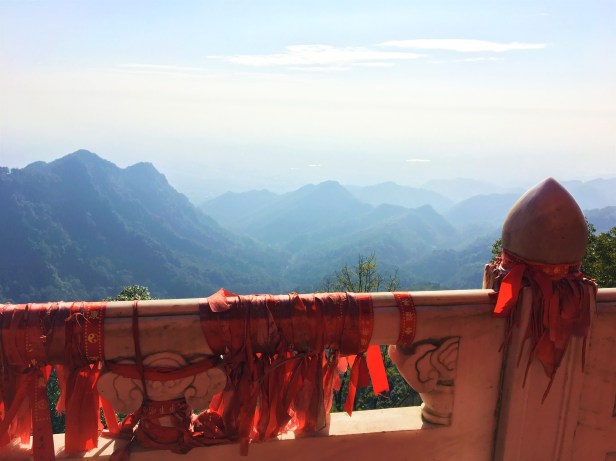
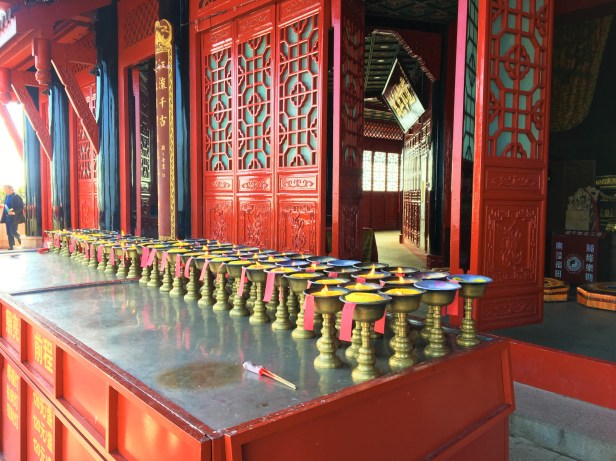
Upon conclusion of our hike we reached some boats, crossed a lovely lake, and then continued onto cable cars to ascend to the top of the mountain, with the main temple.






 Hot Pot and a Dinner Show
To conclude our work event we attended a hot pot dinner. Hot pot is a Chinese dish involving a simmering metal pot with a flame underneath and broth inside, placed at the center of a table. All the raw ingredients are placed beside the metal pot, so people can add and cook whatever they like in the broth. Let me tell you, if you are looking for a full on evaluation of your chopstick skills, this is a great opportunity. Also, add in a few drinks of a traditional Nepalese spirit. Then everyone did karaoke. It was quite a night.


Chengdu city
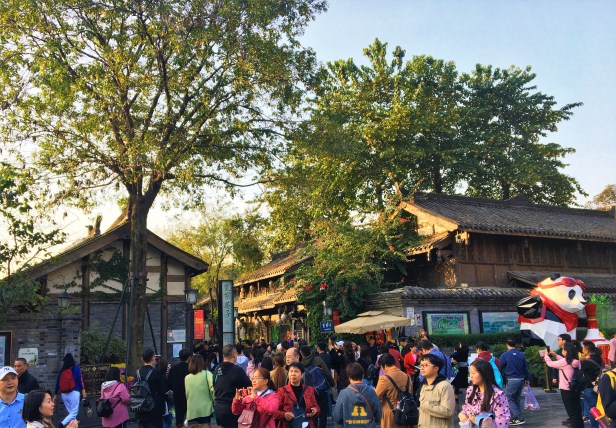
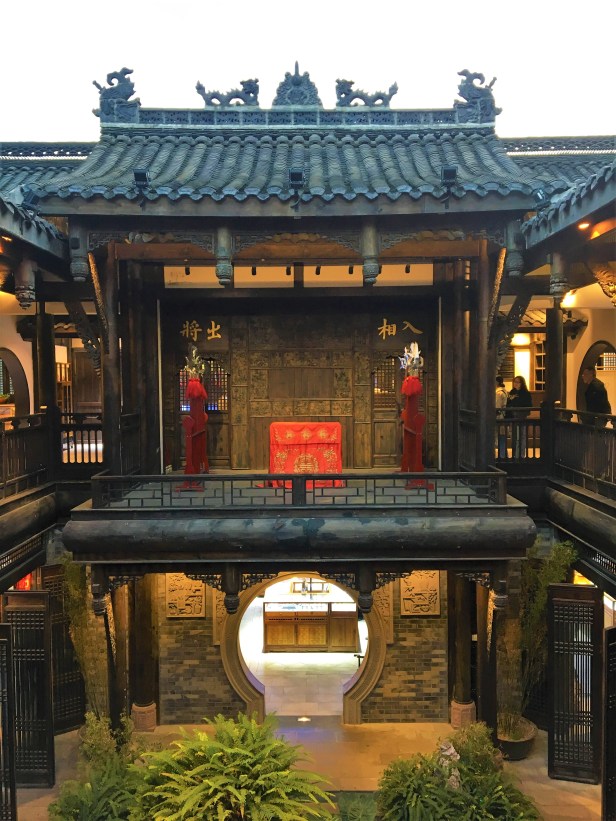
I spent the rest of my time prior to my flight exploring the city of Chengdu with a colleague. We checked out the various food stalls, shopped, and checked out the local Sichuan Museum. Also, we stayed in an absolutely gorgeous hotel, Huanhuahongtai Hotel.




*Some advice: I was with a group, and everyone but me spoke Chinese. I think the trip would be pretty confusing without a native speaker. Definitely possible, but there are numerous different tickets needed (for the entrances, and the boat, the cable car, the boat again, etcetera, etcetera), and the direction you need to go to reach the upper temple area isn’t necessarily straightforward, so it’s best to have a good idea of what the trip involves ahead of time. I was the one and only Westerner in the hotel where we stayed, and the town is similar; very few people spoke English (understandable, since I was in China); this would have been pretty tricky without my colleagues.
Also, you need to be able to hike a good deal.
 thecloudsarelowerhere