
For the second part of our visit we drove west towards Galway, primarily for more ancient Ireland exploration. During the next two nights, we stayed in a quaint old farmhouse on a dairy farm. We even had the pleasure of meeting some of their newest editions!


Corlea Trackway
On our way west, we stopped at the Corlea Trackway, which is a small museum dedicated to an Iron Age oak bog road built around 148 B.C., and the largest of its kind uncovered in Europe. We had a fantastic tour guide who spoke all about the area and the significance in Celtic history.


Rathcroghan
Yet another important site of ancient Ireland, Rathcroghan is prominent in Celtic mythology. It was from where Queen Medb ruled, a key character in the Táin Bó Cúailnge, (Cattle Raid of Cooley). Tales of Queen Medb (Maeve) talk of a fierce and beautiful queen, merciless and dramatic. This website sums her up well, and tells the fascinating account of how she died.


The Cave of the Cats, Oweynagat
Oweynagat, the Cave of the Cats, was one of the coolest places we discovered, certainly in my 8 and 10 year olds’ opinions. The cave is said to be the entrance to the underworld, but not like Hades or Hell. Its more accurately described as the entrance to the fairy world, and celtic mythology asserts you can both enter and leave the fairy realm from this cave.


Oweynagat is also related to the origins of Halloween. For the celts, Samhain (which was held on November 1st), represented the end of summer, and the Celts believed that gods and other worlds were visible on this day. For instance, celtic folklore states that the Morríghan, goddess of war and fate, and her dark and mischievous followers, emerge from Oweynagat every year on Samhain because the veil between worlds is thin enough to escape the underworld and wreak havoc. They return to the cave when the celebrations are over. As the gods often played tricks on mortals, it was a dangerous time, and people would dress up to try to disguise themselves from evil spirits (Halloween).
Inside the cave, above the entrance is an inscription that reads: “Fraech son of Medb”, further enforcing the connections of the folklore and ancient rulers. 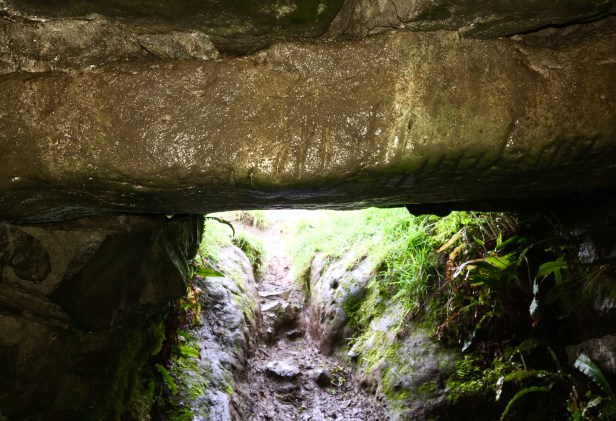
We climbed in – I followed my girls in who were already quite far by the time I could navigate my way into the short and narrow passageway. But they were ready for the fairy world, no looking back!
The cave entrance was small, and since it had rained all morning, very muddy. We had to crouch down, and crawling would have been much easier if not for the mud. But once we made it through the entryway, the cave began to open up, and once fully into the natural limestone section, the walls climbed into an elongated triangle, like a tall church steeple. The whole place glittered with moisture (and fairies?) , and it did feel like we were embarking into the under world.


Carrowkeel Passage Tombs
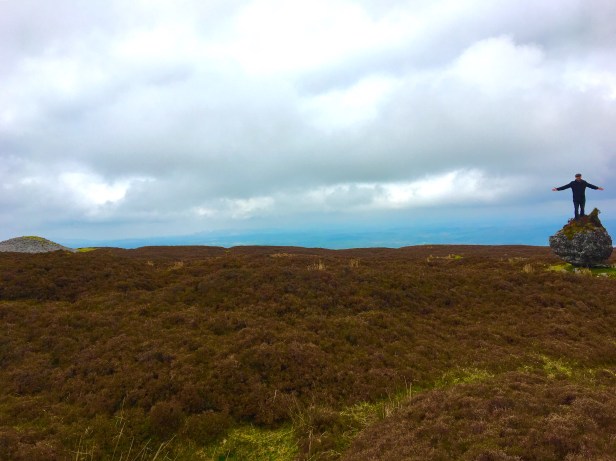
Carrowkeel Passage Tombs are hilltop neolithic passage tombs spread across the Bricklieve Mountain range. Not much is known about the cairns, although the time period of use is Bronze Age, and in 1911 the tombs were excavated for the first time, somewhat destructively. 




Carrowmore
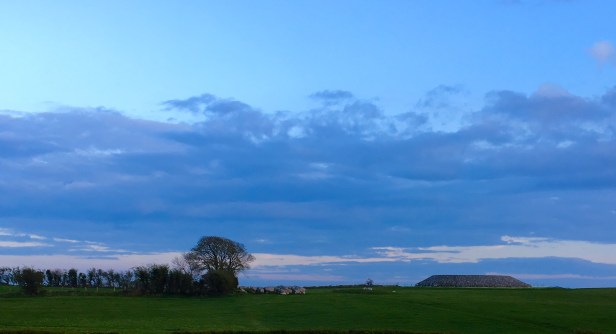
The largest and oldest collection of stone circles and dolmens known from neolithic Ireland are found at Carrowmore, a collection of burial monuments. We drove by to see a few at sunset. 

Galway
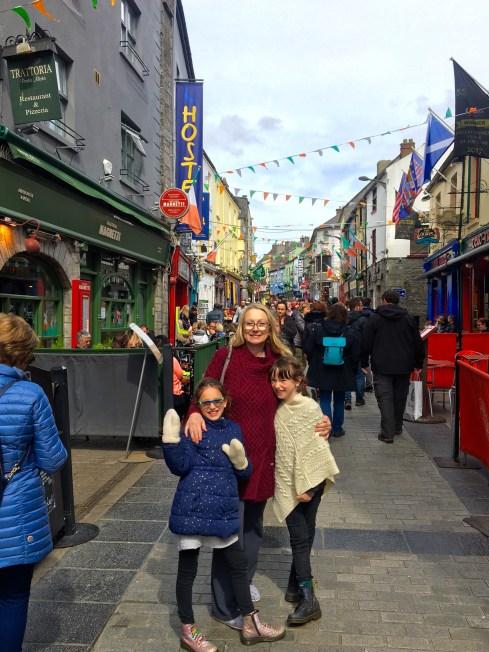
We spent a few hours in Galway, shopping for adorable wool sweaters and ponchos and mittens, learning about the origins of the Claddagh ring, and having lunch at McDonagh’s.


Streedagh Beach
North of Galway is Streedagh Beach, where we spent a few sunny hours investigating the different species of fossil corals. We saw zaphrentis, colonial corals, and siphonophyllia. 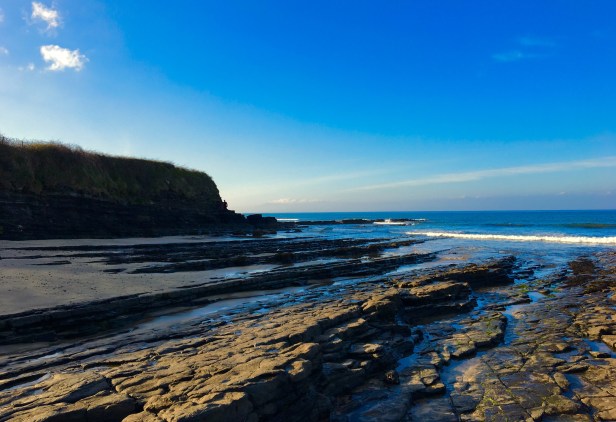


 thecloudsarelowerhere